


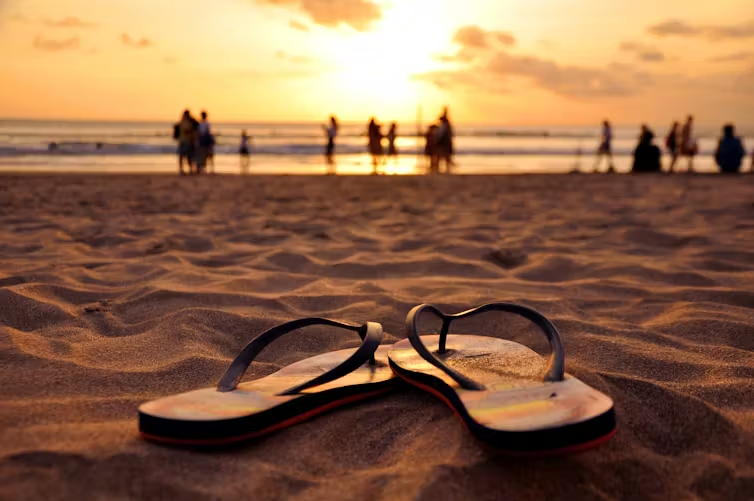
In turn, tropical destinations can be hot spots of mosquito-borne diseases such as dengue. In fact, Australian health authorities have warned travellers to Bali to be aware of the risk of dengue, with cases surging in the region.
So here’s how to protect yourself and your family on holidays.
What is dengue?
Dengue virus infection (commonly known as dengue fever, or just dengue) is caused by viruses spread by the bite of a mosquito. The mosquito species that typically transmit dengue are Aedes aegypti and Aedes albopictus.
There are four strains of dengue virus. Each has the potential to cause illness that can range from mild to severe and potentially life threatening.
Symptoms typically include rash, fever, chills, headache, muscle and joint pain, and fatigue. People also often report abdominal pain, nausea and vomiting.
While infection with just one of these viruses can make you sick, subsequent exposure to other strains can have more serious health implications. In these cases, symptoms can also include the presence of blood in vomit, bleeding gums and breathing difficulties.
Dengue infection must be confirmed via a blood test, but there are no specific treatments. Most people will recover on their own however staying hydrated is crucial and pain relief can help with symptoms. If more severe illness occurs, seek urgent medical care.
Are travellers at risk?
The disease is now endemic in around 100 countries and an estimated 4 billion people are considered at risk. Asian countries represent around 70% of the global disease burden. Even Europe is at risk.
One of the worst years on record was 2023, but the burden of dengue continues to grow. In the first four months of 2024, Indonesia reported three times as many cases of dengue compared to the same period in 2023.
Dengue is not a new risk to Australian travellers. Before COVID disrupted international travel, the number of Australians returning from tropical destinations with dengue was steadily increasing.
For example, between 2010 and 2016, there was an average annual increase of 22% of travellers returning to Victoria with dengue. Almost half of these people contracted the illness in Indonesia. Bali is well documented as posing a risk of dengue to travellers.

Cameron Webb (NSW Health Pathology)
International travel restrictions due to COVID abruptly stopped this trend. But now Australians are again embracing international travel, cases are rising once more.
Bali isn’t the only destination with a surge in dengue, but we know it’s a popular holiday destination for Australian travellers. There’s little doubt plenty of families will be heading to Bali these school holidays.
How about the risk in Australia?
Not all mosquitoes can spread dengue viruses. This is why the risk is different in Bali and other tropical regions compared to Australia.
Although there are more than 40 Australian mosquito species known or suspected to be transmitting local pathogens, such as Ross River virus, Australia is generally free of local dengue risk due to the limited spread of Aedes aegypti and Aedes albopictus.
While Aedes aegypti is found in parts of Queensland, thanks to interventions by the World Mosquito Program and local authorities dengue risk is low. These interventions include the release of laboratory-bred mosquitoes that prevent mosquitoes in the environment spreading viruses, as well as community education. But local cases occasionally occur.
Aedes albopictus is not currently found on the Australian mainland but is present in the islands of the Torres Strait. A dengue outbreak has occurred there this year.
Keep mozzies away during the day, not just at night
While there is a vaccine available, it’s not recommended for short-term travellers. There are strict eligibility criteria for its use, so speak to a health professional for advice.
For the majority of travellers, preventing mosquito bites is the only way to prevent disease.
But there are differences in the behaviour of dengue mosquitoes that mean the normal measures to avoid mosquito bites may not be as effective.
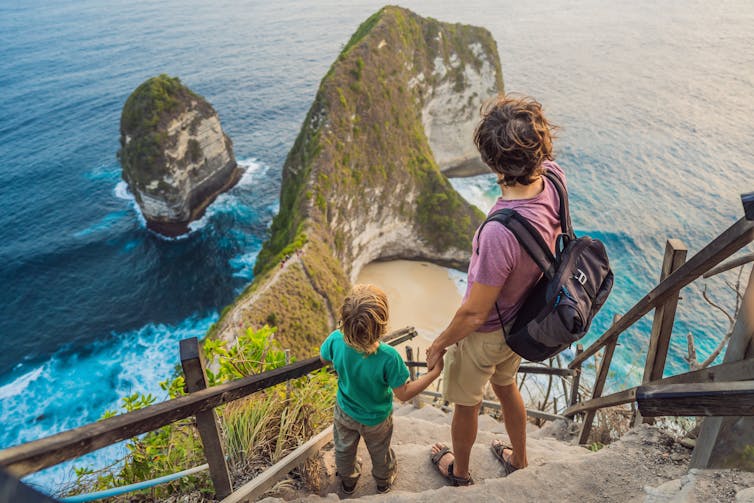
Elizaveta Galitckaia/Shutterstock
During the Australian summer, mosquitoes found in local wetlands can be incredibly abundant. We tend to need to reach for the repellent and cover up to stop bites as soon as the sun starts going down.
Aedes aegypti and Aedes albopictus can aggressively bite people but they’re not as abundant as the swarms of summer mosquitoes back home.
They also bite during the day, not just at night. So for those travelling to Bali or other areas at risk of dengue, putting insect repellent on throughout the day is recommended.
What to pack for protection
If you’re staying in a major resort, there’s likely to be a mosquito control program in place. This may include minimising available water for mosquito breeding in combination with insecticide use. Mosquitoes are also less likely to be an issue in air-conditioned accommodation.
But if you’re planning to spend time out and about visiting local villages, markets, or in nature, it’s best to protect against bites.
Light coloured and loose fitting clothing will help stop mosquito bites (and help keep you cool). Covered shoes can help too – dengue mosquitoes love smelly feet.
Finally, it’s best to take some insect repellent with you. There may not be any available at your destination, and formulations on sale might not have been through the same thorough testing as products approved in Australia.
Cameron Webb, medical entomologist, NSW Health Pathology. Clinical Associate Professor and Principal Hospital Scientist, University of Sydney
This article is republished from The Conversation under a Creative Commons license. Read the original article.