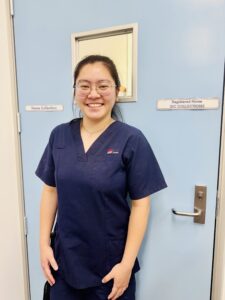

A new research paper on small cell lung cancer co-authored by NSW Health Pathology cytologist Shailendra Gune points to more personalised treatment options for patients with this aggressive form of cancer, using routine diagnostic biopsy samples.
Small cell lung cancer (SCLC) is one of the most aggressive and hard to treat forms of cancer.
It grows quickly, spreads early, and is often diagnosed when surgery is no longer possible.
Survival rates remain low and for many years there have been limited treatment options.
Now, new research co-authored by Shailendra Gune, head of Cytology at NSW Health Pathology’s Liverpool Laboratory, is helping to change that picture.
By analysing routine diagnostic biopsy samples using advanced molecular techniques, the study provides new insights into why SCLC behaves differently from patient to patient and how treatments could be better matched to each individual.
Making the most of routine diagnostic samples
Unlike many other cancers, SCLC is rarely removed surgically. Instead, diagnosis is usually made using small biopsy samples collected during a procedure called Endo Bronchial Ultrasound–guided Trans Bronchial Needle Aspiration.
These samples are essential for diagnosis but have traditionally been seen as too small for large scale molecular analysis.
In this study, researchers showed that these routinely collected samples can be used for cutting edge multi-omics research.
Tumour samples from 82 patients were analysed using DNA methylation profiling, whole genome sequencing, RNA sequencing, and blood based (cell free DNA) testing.
“This work shows that diagnostic samples already being collected in hospitals can also unlock very powerful molecular information,” said Shailendra.“That opens the door to research findings that are much closer to real world patient care.”
Identifying four distinct types of small cell lung cancer
Using DNA methylation analysis, a way of reading chemical changes that regulate how genes are switched on and off, the research team identified four distinct molecular groups of SCLC.
These groups differed not only in their biology, but also in patient survival and potential treatment opportunities.
- Group 1 – Immune Enriched Tumours
These cancers showed signs of immune activity, including higher levels of immune cells called CD8+ T cells. Patients in this group tended to live longer, suggesting their tumours may be more responsive to certain therapies. - Group 2 – ASCL1-driven tumours
This was the largest group. These cancers showed high levels of specific genes, including SLFN11 and DLL3, which are already being explored as drug targets. This group may benefit most from emerging targeted treatments. - Group 3 – NEUROD1-driven tumours
These tumours showed different gene activity and a greater presence of supportive tissue cells called fibroblasts, suggesting another distinct biological pathway driving disease. - Group 4 – Non-Neuroendocrine tumours
This group had the poorest survival outcomes. However, it also showed high expression of TACSTD2, pointing to a possible new therapeutic target for these patients.
Across most tumour groups, the gene SEZ6 was also highly active, highlighting another potential target for future therapies.
Why tumour differences matter
At present, most people with SCLC receive similar treatments, usually a combination of chemotherapy and immunotherapy. While this approach has helped some patients, only about one in five see lasting benefit.
This research shows that SCLC is not a single disease, but actually four distinct types, each with its own biological fingerprint. Understanding these differences is critical.
“Treatments that work well for one molecular group may be far less effective for another,” said Shailendra.
“By recognising this diversity, we can start to think about more personalised treatment strategies rather than a one-size-fits-all approach.
“Our 2024 study (Evaluation of Endobronchial Ultrasound-Guided Transbronchial Needle Aspiration (EBUS-TBNA) Samples from Advanced Non-Small Cell Lung Cancer for Whole Genome, Whole Exome and Comprehensive Panel Sequencing – DOI: 10.3390/cancers16040785) showed that routine diagnostic samples were strong enough for advanced genetic testing.
“This new work takes that a step further by using those samples to define these cancer subgroups and highlight new possibilities for targeted therapy.”
Bridging research and clinical care
The study demonstrates that DNA methylation testing on standard diagnostic samples can capture both the internal features of the tumour and its surrounding environment, including immune cells. This makes methylation profiling a powerful tool for future clinical decision-making.
The findings also help bridge a long-standing gap in SCLC research. Because tumour tissue is so limited, SCLC has historically been underrepresented in major cancer genomics projects.
This work shows that it is possible to overcome those barriers using samples already collected in routine care.
While further research and clinical trials are needed, this study lays important groundwork for precision oncology in small cell lung cancer, where treatment is guided by the molecular features of each patient’s tumour.
“Our goal is better outcomes for patients,” said Shailendra.
“By understanding the biology of these cancers in more detail, we can help guide future treatments and improve care.
“This research highlights the critical role NSW Health Pathology plays in translating laboratory science into meaningful clinical impact, using everyday diagnostic work to drive innovation and improve patient outcomes.”