Funds to deliver game-changing approach to cancer screening and treatment

Funds to deliver game-changing approach to cancer screening and treatment

Ground‑breaking research at NSW Health Pathology’s anatomical pathology laboratory at Royal North Shore Hospital could transform how cancer is diagnosed and treated, using a simple blood test instead of invasive biopsies.

Con­grat­u­la­tions to Pro­fes­sor Antho­ny Gill and Pro­fes­sor Nick Pavlakis, on secur­ing a $3.75 mil­lion Trans­la­tion­al Pro­gram Grant via Can­cer Insti­tute NSW to bring a less inva­sive method of diag­nos­ing and mon­i­tor­ing can­cer into every­day care.

Pro­fes­sor Gill, NSW Health Pathology’s Senior Staff Spe­cial­ist in Anatom­i­cal Pathol­o­gy at Roy­al North Shore Hos­pi­tal, is lead­ing the project with his col­league Pro­fes­sor Pavlakis, oncol­o­gist at RNSH and the Kolling Institute.

The research focus­es on liq­uid biop­sies, a sim­ple blood test that can detect tiny frag­ments of DNA released by can­cer cells. For some patients, this approach has the poten­tial to replace tra­di­tion­al tis­sue biop­sies and even surgery.

“The great major­i­ty of tri­als of new can­cer treat­ments around the world now include a liq­uid biop­sy com­po­nent to track the response of the tumours. It is now impor­tant to bring capa­bil­i­ty for this new test­ing to NSW,” Pro­fes­sor Gill said.

“This new tech­nol­o­gy can pick up small amounts of DNA shed by can­cer in the blood, pro­vid­ing a valu­able screen­ing tool and cru­cial infor­ma­tion to guide treatment.

“Liq­uid biop­sies are not only used in the diag­no­sis of can­cer, but to assess whether any can­cer has been left behind fol­low­ing surgery, if a can­cer has returned and if a tumour is not respond­ing to chemotherapy.

“They will inform treat­ment approach­es after surgery to deter­mine if radio­ther­a­py or chemother­a­py are also need­ed to pre­vent a can­cer return­ing. We know that if tiny frag­ments of DNA from the can­cer are still in the blood after surgery, then more treat­ment is needed.

“Liq­uid biop­sies will sup­port per­son­alised care, enabling clin­i­cians to accu­rate­ly track the effec­tive­ness of tar­get­ed treat­ments, and adjust ther­a­pies to meet indi­vid­ual needs.”

Benefits for rural patients

The research could bring sig­nif­i­cant ben­e­fits for patients liv­ing in region­al and rur­al areas, who are often required to trav­el long dis­tances for biopsies.

NSW Health Pathol­o­gy Chief Exec­u­tive Vanes­sa Janis­sen said sup­port­ing cut­ting-edge research is key to ensur­ing patients across NSW ben­e­fit from emerg­ing technologies.

“Our role is to ensure patients, no mat­ter where they live, have access to advanced diag­nos­tic ser­vices that sup­port faster diag­no­sis, bet­ter treat­ment deci­sions and improved out­comes,” she said.

“This fund­ing recog­nis­es the out­stand­ing exper­tise with­in NSW Health Pathol­o­gy and our part­ners, and our com­mit­ment to remain­ing at the fore­front of inno­va­tion in pathol­o­gy and can­cer care.”

Roy­al North Shore Hos­pi­tal oncol­o­gist and lead­ing Uni­ver­si­ty of Syd­ney researcher Pro­fes­sor Nick Pavlakis has wel­comed the mul­ti-mil­lion-dol­lar fund­ing boost, say­ing liq­uid biop­sies will deliv­er wide-rang­ing benefits.

“Liq­uid biop­sies for can­cer are not just one test. It is a com­bi­na­tion of dif­fer­ent tests,” Prof Pavlakis said.

“Some are designed as screen­ing tests, some are designed to pre­dict response to treat­ment, some are designed to mon­i­tor for recur­rence. Each dif­fer­ent type of test has a dif­fer­ent role at dif­fer­ent stages of diag­no­sis and treatment.

“A liq­uid biop­sy tumour bank is being devel­oped so that when patients with can­cer have a blood test, they will be giv­en the oppor­tu­ni­ty to donate a small sam­ple of blood. This will help refine our test­ing, and progress cru­cial ther­a­pies for a broad range of cancers.”

(Top pho­to: Prof Nick Pavlakis and Prof Antho­ny Gill at Roy­al North Shore Hospital)


Celebrating our pathology nurses on International Nurses Day

International Nurses Day recognises the extraordinary contribution of nurses across our health system. At NSW Health Pathology, nurses like Joanne, Lorna, Dany and Angelie play a vital role in delivering safe, high-quality, patient-centred care every day.

On 12 May, we cel­e­brate Inter­na­tion­al Nurs­es Day—an oppor­tu­ni­ty to recog­nise the com­pas­sion, pro­fes­sion­al­ism and ded­i­ca­tion of nurs­es across the pub­lic health system.

Mark­ing the birth­day of Flo­rence Nightin­gale, the founder of mod­ern nurs­ing, this day hon­ours a work­force that forms the back­bone of healthcare.

As the largest pro­fes­sion­al group with­in NSW Health, nurs­es are there at every stage of the patient journey—supporting, advo­cat­ing and deliv­er­ing care when it mat­ters most.

Here at NSW Health Pathol­o­gy, our nurs­es play a unique and essen­tial role. From spe­cial­ist col­lec­tions to edu­ca­tion and train­ing, they are crit­i­cal to ensur­ing accu­rate diag­nos­tic results and pos­i­tive patient experiences.

Lorna Cockrell – Nurse Educator and PoCT Clinical Training Coordinator

Lorna Cockrell
Lor­na Cockrell

With a back­ground in emer­gency, remote and region­al nurs­ing, Lor­na brings a wealth of expe­ri­ence to her statewide role in edu­ca­tion and train­ing for our Point of Care Test­ing (PoCT) devices.

Orig­i­nal­ly aspir­ing to tour the world in a punk rock band, Lor­na describes nurs­ing as a “hap­py acci­dent” that became a true pas­sion. Work­ing for more than 14 years in NSW Health, she has found her niche in edu­ca­tion, help­ing clin­i­cians improve the way blood gas sam­ples are col­lect­ed and handled.

“By improv­ing knowl­edge and prac­tices, we improve the reli­a­bil­i­ty of results. That sup­ports safe treat­ment, bet­ter patient out­comes and pos­i­tive patient expe­ri­ences,” Lor­na said.

Lor­na is based in New­cas­tle but deliv­ers train­ing across NSW, work­ing with nurs­es, junior doc­tors, uni­ver­si­ty stu­dents and pathol­o­gy staff to strength­en pre-ana­lyt­i­cal practices.


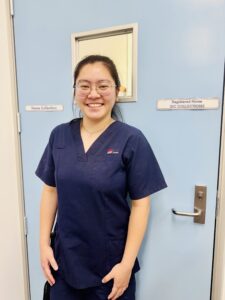
Joanne Aruelo – Registered Nurse and Pathology Collection Trainer/Assessor, Western Sydney

Joanne Aruelo
Joanne Aru­elo

Joanne’s jour­ney into nurs­ing began in edu­ca­tion, sup­port­ing chil­dren with spe­cial needs. That foun­da­tion con­tin­ues to shape her com­pas­sion­ate, patient-cen­tred approach.

Now work­ing across West­mead, Black­town, Auburn and Mt Druitt Hos­pi­tal col­lec­tion cen­tres, Joanne trains and assess­es staff in spec­i­men col­lec­tion to ensure best prac­tice and patient safety.

“High-qual­i­ty spec­i­men col­lec­tion is essen­tial for reli­able diag­nos­tic results,” she explains.

“By ensur­ing staff are con­fi­dent and com­pe­tent, we direct­ly sup­port bet­ter clin­i­cal deci­sions and patient care.”

Dany Sam – Registered Nurse and Second in Charge, Collections, Westmead Hospital

Dany Sam
Dany Sam

Dany was drawn to nurs­ing for its hands-on nature and direct impact on patient care. In pathol­o­gy, she found the per­fect bal­ance of tech­ni­cal pre­ci­sion and patient interaction.

Over five years with NSW Health Pathol­o­gy, Dany has pro­gressed into a lead­er­ship role, sup­port­ing both qual­i­ty and team development.

“Every accu­rate result starts with a qual­i­ty spec­i­men,” she said.

“By main­tain­ing strict pro­to­cols and sup­port­ing our staff, we reduce errors and ensure patients receive time­ly, accu­rate results.”

Through men­tor­ing and con­tin­u­ous improve­ment, Dany helps build a con­fi­dent, high-per­form­ing team who are there to reas­sure and care for peo­ple and put them at ease dur­ing their pathol­o­gy collection.

Angelie Bacani – Registered Nurse, Pathology Collections at Royal Prince Alfred Hospital

International Nurses Day
Ange­line Bacani

Angelie’s path into nurs­ing was influ­enced by her moth­er, who is also a nurse. Angelie stud­ied pathol­o­gy in the Philip­pines where she devel­oped a pas­sion for the tech­ni­cal and patient-focused aspects of healthcare.

Now spe­cial­is­ing in haema­tol­ogy col­lec­tions and vene­sec­tion, she com­bines pre­ci­sion with a strong focus on patient comfort.

“I focus on get­ting the col­lec­tion right the first time, as that reduces dis­com­fort and builds trust with patients.”

Angelie is known for her abil­i­ty to put patients at ease, often using con­ver­sa­tion, empa­thy and per­son­al con­nec­tion to cre­ate a pos­i­tive expe­ri­ence, even for those who may feel anx­ious or unwell.

Recognising the difference nurses make

Whether they are col­lect­ing sam­ples, train­ing and edu­cat­ing staff, lead­ing teams or sup­port­ing patients through vul­ner­a­ble moments, the nurs­es work­ing in our ser­vices make a mean­ing­ful dif­fer­ence every day.

Their work under­pins accu­rate diag­no­sis, informs treat­ment deci­sions and ensures patients feel cared for through­out their health­care journey.

This Inter­na­tion­al Nurs­es Day, we thank all our nurs­es for their unwa­ver­ing com­mit­ment and the vital role they play in deliv­er­ing trust­ed, high-qual­i­ty care.

Hap­py Inter­na­tion­al Nurs­es Day!

Celebrating 25 years of dedication: Farewell to Marc Balfour

After 25 years of dedicated service with NSW Health Pathology, Queanbeyan Hospital Laboratory’s Marc Balfour retired on 1 May, leaving behind a legacy of professionalism, reliability and quiet leadership.

Marc has spent his entire career as a Hos­pi­tal Sci­en­tist at Quean­beyan, serv­ing as sec­ond-in-charge (2IC) of the lab­o­ra­to­ry for almost two decades.

In this role, he has been a trust­ed and steady pres­ence, reg­u­lar­ly step­ping in as Lab­o­ra­to­ry Man­ag­er, over­see­ing month­ly stock man­age­ment, and sup­port­ing the smooth oper­a­tion of the lab across all disciplines.

With a par­tic­u­lar pas­sion for Micro­bi­ol­o­gy and Haema­tol­ogy, Marc has tak­en on many senior respon­si­bil­i­ties in these areas, while also serv­ing as a Pri­ma­ry Oper­a­tor for most lab­o­ra­to­ry instruments.

Over the years, he has played a key role in train­ing and men­tor­ing new staff, shar­ing his knowl­edge and help­ing shape the next gen­er­a­tion of scientists.

Marc’s path into pathol­o­gy began with a high school counsellor’s rec­om­men­da­tion, and that advice led to a career marked by ded­i­ca­tion and impact.

Reflect­ing on his career, Marc recalls sev­er­al proud moments.

“It’s always nice when you know the work you are doing has a pos­i­tive impact on some­one. I remem­ber assist­ing in a life-sav­ing response for a mater­ni­ty patient dur­ing a mas­sive trans­fu­sion pro­to­col. It was even more mean­ing­ful when the patient lat­er returned to the lab to per­son­al­ly thank the team with flow­ers,” Marc said.

“Anoth­er career high­light was receiv­ing praise dur­ing a live ses­sion with renowned Haema­tol­ogy Mor­phol­o­gy edu­ca­tor Gillian Rozenberg.

“It was a small com­pli­ment, but a real­ly proud moment.”

Marc also takes pride in the laboratory’s strong per­for­mance dur­ing NATA assess­ments, and said the team­work and com­mit­ment from the Quean­beyan lab staff could always be relied upon, and was required to main­tain such high standards.

Col­leagues describe Marc as depend­able, hard­work­ing and a per­son of great integrity.

“It has been a plea­sure work­ing with you for the past 15 years. The lab­o­ra­to­ry won’t be the same with­out you,” said Igor Cvetkos­ki, Hos­pi­tal Scientist.

“Thank you for your hard work, ded­i­ca­tion and sup­port over the years. We wish you all the best as you begin this well-deserved new chap­ter,” said Lab­o­ra­to­ry Man­ag­er Krit Singh.

In retire­ment, Marc is look­ing for­ward to focus­ing on his fit­ness, includ­ing cycling, gym and walk­ing, as well as trav­el­ling and tack­ling a num­ber of projects around the house.

Marc, thank you for your out­stand­ing con­tri­bu­tion over the past 25 years. You will be great­ly missed, and we wish you a long, healthy and ful­fill­ing retirement!

Celebrating Administration Professionals Day

On Friday 1 May we acknowledge the incredible contribution of our administrative professionals across NSW Health Pathology. From reception to rostering and support services – their work matters and we appreciate all that they do!

Our admin­is­tra­tion super­stars are the peo­ple who keep our col­lec­tion cen­tres, lab­o­ra­to­ries, call cen­tres and cor­po­rate and clin­i­cal oper­a­tions run­ning smooth­ly every day, often work­ing behind the scenes!

NSW Health Pathol­o­gy Chief Exec­u­tive Vanes­sa Janis­sen thanked all admin­is­tra­tive staff across the state for their hard work.

“Our admin pro­fes­sion­als make a real dif­fer­ence every day,” Vanes­sa said.

“The work they do undoubt­ed­ly plays a large role in help­ing NSW Health Pathol­o­gy deliv­er high qual­i­ty patient care and I hope they know their hard work nev­er goes unnoticed.”

We spoke to some of our admin super­stars – Lisa, Les­ley, Clare, Shireen, Joan, Meli­ta, Vir­ginia and Katie – about the impact their work has on our patients and the valu­able con­tri­bu­tion they make to patient care.

A spe­cial con­grat­u­la­tions to Les­ley, Clare and Lisa on their incred­i­ble years of ser­vice and wish them all the best as they pre­pare to retire in the com­ing weeks!

Les­ley has an amaz­ing 48 years of ser­vice, Clare has 30 years of ser­vice and Lisa has 27.5 years of ser­vice– an out­stand­ing achieve­ment for which we are huge­ly grateful!

Meet Lesley Maclaren, Administration Officer, Gosford Anatomical Pathology (recently retired)

Lesley
Les­ley Maclaren

How long have you worked for NSW Health Pathology?
48 years! I have worked for NSW Health Pathol­o­gy since 1 Sep­tem­ber 1978, I was only out of school for 11 months. I start­ed as a trainee blood col­lec­tor, lab aide and cler­i­cal assis­tant, doing mul­ti­ple jobs which kept my work­day very inter­est­ing! In 1992 I moved to Gos­ford and worked in blood collection/specimen recep­tion until around 1994 when I moved to Anatom­i­cal Pathol­o­gy (AP) as a typ­ist at Roy­al Prince Alfred Hos­pi­tal for nine months. I was also sec­ond­ed to Con­cord when two of their three sec­re­taries retired. I lat­er moved there per­ma­nent­ly, hav­ing bought a home in Gos­ford.  Then I got a call out of the blue in 2010, telling me there was a job for me at Gos­ford AP, where I worked until I retired recently.

What are some of your career highlights?
All of my work­ing life has been reward­ing and very inter­est­ing so it’s hard to select a sin­gle high­light over my career in pathol­o­gy. My begin­ning in pathol­o­gy is strange, I went for an inter­view for a trainee­ship, and was suc­cess­ful with two oth­ers, I was lucky to be giv­en pathol­o­gy. My boss at the time Mr Mayes, asked me if I knew what pathol­o­gy was, I said no, and he said to me “walk this way” and a very inter­est­ing walk it has been ever since!

What are your plans for your retirement?
My retire­ment plans are trav­el­ling around Aus­tralia, it’s such an amaz­ing coun­try, basi­cal­ly camp­ing and vis­it­ing retired friends who have moved all up and down the east coast, also vis­it­ing friends in the Aus­tralian outback.


Meet Clare West, Senior Human Resources Consultant, based at our Westmead Laboratory

Clare West
Clare West

How long have you worked at NSW Health Pathol­o­gy?  I began my career in Novem­ber 1996 in the Anatom­i­cal Pathol­o­gy Depart­ment at West­mead Hos­pi­tal, work­ing as a Histopathol­o­gy Typ­ist. In Decem­ber 1999, I trans­ferred to Nepean Hos­pi­tal, where I ini­tial­ly worked as Sec­re­tary to pathol­o­gists Prof Roger Wil­son, and lat­er to Prof James Bran­ley. I hold many fond mem­o­ries of this time and the fan­tas­tic peo­ple I worked with.  In June 2020, I made a sig­nif­i­cant and some­what daunt­ing career change, join­ing the Metro North West Human Resources (HR) team. While step­ping into HR was a big and scary shift, it proved to be exact­ly the change I need­ed and has been an incred­i­bly reward­ing expe­ri­ence pro­vid­ing me an oppor­tu­ni­ty to work with more fan­tas­tic peo­ple. My enjoy­ment of work­ing with­in pathol­o­gy ser­vices goes right back to my ear­ly career with Queens­land Pathol­o­gy in Townsville. I have always loved work­ing with pathol­o­gy staff and deeply val­ue the vital con­tri­bu­tion we make to health­care and the community.

What are some of your career high­lights? One of the most reward­ing aspects of my career in pathol­o­gy has been gain­ing a true under­stand­ing of the immense con­tri­bu­tion our ser­vice makes to patient care and the broad­er com­mu­ni­ty. Pathol­o­gy staff are often under­val­ued and work large­ly behind the scenes, yet their role is absolute­ly crit­i­cal to the diag­no­sis and treat­ment of patients. Pathol­o­gy staff are often under­val­ued and work large­ly behind the scenes, yet their role is absolute­ly crit­i­cal to the diag­no­sis and treat­ment of patients.

What inspired you to pur­sue a career in pathol­o­gy? While work­ing as a casu­al med­ical typ­ist at Townsville Hos­pi­tal, I was for­tu­nate to have the oppor­tu­ni­ty to back­fill a pathol­o­gy sec­re­tary role. From that moment, I fell in love with the “pathol­o­gy vibe” and knew this was where I want­ed to build my career.

What are you look­ing for­ward to in retire­ment? As I look ahead to retire­ment, I am most excit­ed about spend­ing more time with my elder­ly par­ents and parents‑in‑law, and wel­com­ing my first grand­child, who is on the way. I’m also look­ing for­ward to spend­ing more time on myself and doing more quilt­ing, per­haps get­ting a dog, enjoy­ing sleep‑ins, and tak­ing the free­dom to do what­ev­er I feel like each day!

Meet Lisa McElligott, Executive Assistant to Nepean Local Pathology Director, Prof James Branley

Lisa
Lisa McEl­lig­ott

How long have you worked for NSW Health Pathology?
I start­ed on 2 Novem­ber 1998 – which means I’ve been here for 27.5 years! I’ve been the Exec­u­tive Assis­tant to A/Prof James Bran­ley for the past five years, man­ag­ing a busy diary, solv­ing prob­lems as they arise and keep­ing things run­ning smooth­ly behind the scenes. A big part of my role is build­ing strong work­ing rela­tion­ships with the pathol­o­gists, Senior Med­ical Offi­cers and lab man­agers, which I real­ly val­ue. Pri­or to this, I spent 22 years as an AP typ­ist, where I tran­scribed dic­tat­ed reports and pro­vid­ing essen­tial sup­port to the team, includ­ing trou­bleshoot­ing day-to-day issues.

What are some of your career highlights?
In my pre­vi­ous role as an AP typ­ist, I found it very reward­ing know­ing that my work con­tributed to accu­rate and time­ly patient results. I’ve always tak­en pride in being effi­cient and pro­duc­ing high-qual­i­ty work. In my cur­rent role as an Exec­u­tive Assis­tant, my focus is on sup­port­ing A/Prof Bran­ley in his day-to-day respon­si­bil­i­ties, along with the broad­er needs of the pathol­o­gists. While the focus has shift­ed, I bring the same effi­cien­cy, knowl­edge and atten­tion to detail to every­thing I do. I’ve always approached my work with a strong sense of respon­si­bil­i­ty and of doing what’s required to the best of my ability.

What inspired you to pur­sue a career in pathology?
I didn’t orig­i­nal­ly choose pathol­o­gy as a career path- it was more that an admin­is­tra­tive posi­tion became avail­able at a pri­vate pathol­o­gy provider in Emu Plains, close to home, and it suit­ed my cir­cum­stances at the time. How­ev­er, once I was work­ing there, I began to under­stand the impor­tance of pathol­o­gy in health­care and devel­oped an inter­est in the field. After about four years, I was look­ing for a more secure role and saw an AP typ­ist posi­tion adver­tised at Nepean Pathol­o­gy in the local paper. I applied, was suc­cess­ful, and that’s how my longer-term career in pathol­o­gy real­ly began.

What are you look­ing for­ward to in retirement?
Retire­ment feels like the begin­ning of a new and spe­cial chap­ter. After 41 years, it will be a lit­tle bit­ter­sweet to leave my home, as it holds so many mem­o­ries. I’m mov­ing to Lake Cathie, where I’ll be close to both the lake and the ocean, and I’m real­ly look­ing for­ward to the peace and sim­plic­i­ty of that lifestyle. I’m espe­cial­ly excit­ed to spend more time with my chil­dren, my grand­chil­dren, and extend­ed fam­i­ly. I’m hop­ing to enjoy the lit­tle things – qui­et beach walks, fresh air, and a slow­er pace. I’m look­ing for­ward to the change and what’s ahead.

Meet Joan Blight, Administration Manager, Genetics, Prince of Wales Randwick

Joan
Joan Blight

How long have you been work­ing for NSW Health?
I com­menced my career with NSW Health in 1995 at Prince of Wales Hos­pi­tal in Med­ical Imag­ing as a Med­ical Typ­ist. I’ve been the Admin­is­tra­tion Man­ag­er for Genet­ics at Rand­wick since Feb­ru­ary 2023, play­ing a key role in keep­ing the ser­vice run­ning smooth­ly behind the scenes. When I first joined, I was seek­ing a part-time role that would allow me to bal­ance work with rais­ing my young fam­i­ly, and this was per­fect. As an admin­is­tra­tive all-rounder I sup­port­ed med­ical report tran­scrip­tion, patient book­ings, pre­pared x‑ray clin­ic lists and front office operations.

In 2002, I worked with the Direc­tor of Med­ical Imag­ing, fur­ther devel­op­ing my admin­is­tra­tive and office man­age­ment skills. In 2008, I bal­anced my hos­pi­tal role with study­ing Small Busi­ness Man­age­ment while also sup­port­ing the estab­lish­ment and oper­a­tion of a fam­i­ly tim­ber and build­ing sup­plies busi­ness, which I lat­er man­aged full-time from 2012.

After return­ing to NSW Health in 2019 in Child and Fam­i­ly Health, I tran­si­tioned into a full-time role in the Eye Clin­ic and com­plet­ed an eight-month sec­ond­ment in Social Work. I com­menced my cur­rent role in Genet­ics in Feb­ru­ary 2023.

What are some of your career highlights?
Work­ing close­ly with the Lab Man­ag­er and the broad­er Genet­ics team, I thrive in a fast‑paced envi­ron­ment where no two days are the same. From organ­is­ing and coor­di­nat­ing day‑to‑day oper­a­tions to sup­port­ing staff and clin­i­cians, it’s my job to make sure every­thing stays on track. What I love most is the peo­ple. The Genet­ics team is incred­i­bly sup­port­ive and friend­ly, and that makes it a great place to work. I enjoy organ­is­ing, coor­di­nat­ing, and help­ing things run smoothly—while always learn­ing some­thing new along the way

How does your work help us deliv­er excep­tion­al care to the community?
To me, care is being reli­able, pay­ing atten­tion to detail, and sup­port­ing oth­ers. When every­thing runs smooth­ly, it helps the team do their best work and cre­ates a pos­i­tive, respect­ful envi­ron­ment. It’s also about the details, the kind that make a big dif­fer­ence to how a ser­vice runs.

Meet Virginia Keeley, Executive Assistant, Director of Finance & Corporate Services

Virginia
Vir­ginia Keeley

How long have you worked at NSW Health Pathology?
Six years.

How does your work help us deliv­ery excep­tion­al care to the community?
I’ve loved being in a sup­port role to the Finance & Cor­po­rate Ser­vices Port­fo­lio over the past 6 years. This includes Cor­po­rate Finance, Rev­enue and our Com­mer­cial Teams. I receive requests for help on a wide vari­ety of top­ics. No two days are the same, which makes it an end­less­ly inter­est­ing job.

The team is focussed on ensur­ing that we main­tain a finan­cial­ly effi­cient approach to deliv­er­ing our ser­vices, and when­ev­er I am in a meet­ing (usu­al­ly doing the min­utes and actions), I know that our patients and their best inter­ests are gen­uine­ly present in the room, from the deci­sions being made.

I help deliv­er excep­tion­al care to the com­mu­ni­ty by tak­ing care of all the behind-the-scenes admin­is­tra­tive tasks and sec­re­tari­at sup­port that absolute­ly needs to be done but would take time away from the staff in my team mak­ing impor­tant deci­sions on behalf of our com­mu­ni­ty of patients (and the employ­ees of NSW Health Pathology).

Meet Melita Rowland, Executive Assistant, Newcastle Corporate Office

Melita
Meli­ta Rowland

How long have you worked at NSW Health Pathology?
I’ve been with NSW Health Pathol­o­gy for 22.5 years, but who’s counting?!

How does your work help us deliv­er excep­tion­al care to the community?
My role is about sup­port­ing our lead­ers and teams so they can focus on what real­ly mat­ters. I love work­ing with peo­ple at all lev­els of the organ­i­sa­tion from ‘lab land’ to the cor­po­rate office.

If I can make life a lit­tle eas­i­er behind the scenes, I know I’m help­ing sup­port the essen­tial care we pro­vide to patients and the com­mu­ni­ty. I enjoy the vari­ety that comes with work­ing for Australia’s largest pub­lic pathol­o­gy ser­vice – it keeps my job interesting!


Meet Katie Adams, Executive Assistant, Northern Sydney and Central Coast Operations

Katie
Katie Adams

How long have you worked at NSW Health Pathology?
I’ve worked at NSW Health for 10 years in Exec­u­tive Assis­tant and admin­is­tra­tion roles.

What do you love about your work?
I love to organ­ise train­ing and study appli­ca­tions for the Staff Spe­cial­ists, allow­ing them to access study and train­ing opportunities.

When you hear the word ‘care’ in our work, what comes to mind for you?
Care is about recog­nis­ing that even behind the scenes work has a direct impact on patients, and approach­ing every task with pro­fes­sion­al­ism, and con­sid­er­a­tion for the some­times vul­ner­a­ble peo­ple who rely on us. I real­ly enjoy sup­port­ing doc­tors by man­ag­ing admin­is­tra­tive tasks, allow­ing them to focus on deliv­er­ing the best pos­si­ble patient care.

Meet Shireen Hitchen, Administration Officer at Orange Laboratory

Shireen
Shireen Hitch­cock

How long have you worked at NSW Health Pathology?
I’ve worked with NSW Health Pathol­o­gy for 29 years!

What do you love about your work?
I have always enjoyed work­ing in NSW Health Pathol­o­gy and take immense pride in being part of the NSW Health Pathol­o­gy net­work. I find the patient care pathol­o­gy strives to achieve dai­ly is very rewarding.

How does your work help us deliv­er excep­tion­al care to the community?
My role involves a range of tasks from data entry to answer­ing enquiries from patients and clin­i­cians, results deliv­ery, fil­ing, rev­enue and audit­ing. As the test­ing is becom­ing more com­plex, keep­ing up to date can be very chal­leng­ing but also sat­is­fy­ing. I feel like I am a very small part of a big­ger pic­ture mak­ing a difference.

Pathology collections now available from Kensington Street Building at St George Hospital

A new chapter in patient-centred care for Sutherland communities began on 20 April 2026, with the opening of a NSW Health Pathology collection centre in the brand-new Kensington Street Building at St George Hospital.

Locat­ed with­in the hos­pi­tal’s new­ly com­plet­ed, pur­pose built facil­i­ty, the col­lec­tion cen­tre is part of the $411-mil­lion broad­er hos­pi­tal rede­vel­op­ment designed to bring a wide range of ser­vices togeth­er under one roof, mak­ing health­care more acces­si­ble, coor­di­nat­ed and con­ve­nient for the community.

Col­lec­tions (Nurse) Man­ag­er Brad­ford Busoy said the staff are thrilled to be work­ing in their new col­lec­tions centre.

“Patients are the core of our ser­vices. Bring­ing pathol­o­gy clos­er to out­pa­tient ser­vices ensures a smoother, more con­ve­nient and acces­si­ble expe­ri­ence for our patients,” Brad­ford said.

“The mod­ern space has been thought­ful­ly designed to sup­port patients attend­ing out­pa­tient and ambu­la­to­ry ser­vices, allow­ing them to have pathol­o­gy tests col­lect­ed quick­ly and close to their oth­er appoint­ments,” Brad­ford said.

“By inte­grat­ing pathol­o­gy into the Kens­ing­ton Street Build­ing, patients can expe­ri­ence a more seam­less health­care jour­ney, reduc­ing the need to move between mul­ti­ple loca­tions,” Brad­ford said.

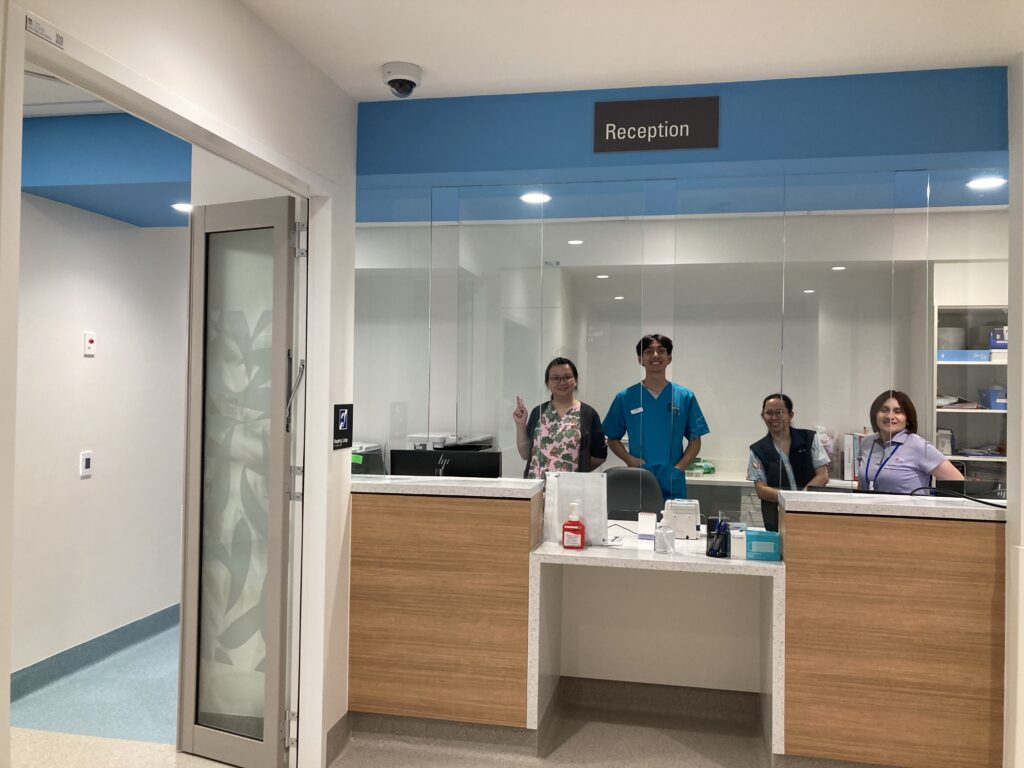
A selfie of 6 smiling pathology collectors
Wel­come to the new col­lec­tion cen­tre at Kens­ing­ton Street Build­ing at St George Hospital.

NSW Health Pathol­o­gy plays a crit­i­cal role in health­care deliv­ery, with pathol­o­gy results under­pin­ning the major­i­ty of med­ical deci­sions. Across the state, the ser­vice con­ducts more than 100,000 tests every day, sup­port­ing clin­i­cians with time­ly and accu­rate diag­nos­tic information.

The new col­lec­tion cen­tre reflects this com­mit­ment to excel­lence, pro­vid­ing an acces­si­ble, wel­com­ing and car­ing envi­ron­ment for patient, while sup­port­ing local clin­i­cians with high-qual­i­ty diag­nos­tic services.

“It also strength­ens on-site ser­vices at St George Hos­pi­tal, ensur­ing patients in the St George and Suther­land region have access to world-class pub­lic pathol­o­gy close to home,” said Bradford.

As part of a broad­er invest­ment in mod­ern health­care infra­struc­ture, South East­ern Syd­ney Local Health District’s Kens­ing­ton Street Build­ing brings togeth­er out­pa­tient clin­ics, reha­bil­i­ta­tion ser­vices and diag­nos­tic care in one cen­tral loca­tion – help­ing to improve health out­comes and patient expe­ri­ence across the region.

This lat­est addi­tion high­lights NSW Health Pathology’s ongo­ing focus on deliv­er­ing acces­si­ble, con­nect­ed and patient-focused ser­vices for com­mu­ni­ties across New South Wales.

Ser­vice details

Loca­tion: Ground Floor, Kens­ing­ton Street Build­ing (KSB).

Open­ing hours: Mon­day to Fri­day, 7.30am – 4:45pm.

Phone: 02 9113 3027

• There is secure paid park­ing under the KSB, with direct lift access to the ground floor.
• No appoint­ment need­ed for rou­tine blood col­lec­tions, but we rec­om­mend the com­mu­ni­ty book in for longer tests. NSW Health Pathol­o­gy rec­om­mends book­ing in for some non-rou­tine tests, like Glu­cose Tol­er­ance Tests (GTT).
• Pae­di­atric col­lec­tions avail­able on Wednes­days, Thurs­days and Fri­days from 8:30am-4pm.
• Patients should bring their refer­ral form and Medicare card.
• The NSW Health Pathol­o­gy web­site has FAQs, with answers to some of the most com­mon ques­tions patients ask about pathol­o­gy tests.

We look forward to caring for you in our new collection centre at St George Hospital.
We look for­ward to car­ing for you in our new col­lec­tion cen­tre at St George Hospital.

Leading the research effort on von Willebrand disease, 100 years after it was first described

This year marks a century since the initial identification of VWD – a bleeding disorder thought to be more common than haemophilia. Today on World Haemophilia Day, we meet world leading VWD researcher, NSW Health Pathology’s Professor Emmanuel Favaloro.

Every year on 17 April, World Haemophil­ia Day is recog­nised world­wide to increase aware­ness of haemophil­ia, von Wille­brand dis­ease (VWD) and oth­er inher­it­ed bleed­ing disorders.

The World Fed­er­a­tion for Hemo­phil­ia (WFH) esti­mates that over 75% of peo­ple liv­ing with haemophil­ia world­wide have not yet been iden­ti­fied and diag­nosed. There are sev­er­al types of haemophil­ia, with the most com­mon being Haemophil­ia A (marked defi­cien­cy in clot­ting fac­tor VIII) fol­lowed by Haemophil­ia B (marked defi­cien­cy in clot­ting fac­tor IX).

The diag­nos­tic sit­u­a­tion for VWD, a bleed­ing dis­or­der believed to be more com­mon than haemophil­ia, is glob­al­ly known to be even worse than that for haemophil­ia. VWD is due to a marked defi­cien­cy in a haemo­sta­t­ic pro­tein called von Wille­brand fac­tor (VWF).

NSW Health Pathol­o­gy utilis­es a con­tem­po­rary pan­el of lab­o­ra­to­ry assays to aide in the diag­no­sis of both haemophil­ia and VWD, with these tests being har­monised across dif­fer­ent lab­o­ra­to­ries with­in the net­work. Much of this work has been led by one of our Prin­ci­pal Sci­en­tists, Pro­fes­sor Emmanuel J Faval­oro, based at West­mead Hospital.

Pro­fes­sor Faval­oro has pub­lished over 130 papers on VWD. The year 2026 marks the 100-year anniver­sary of the recog­ni­tion of VWD. Prof Erik von Wille­brand pub­lished his sem­i­nal work in 1926, although he called his new­ly iden­ti­fied bleed­ing dis­or­der “Hered­i­tar pseu­doe­mophili” (or “hered­i­tary pseudohemophilia”).

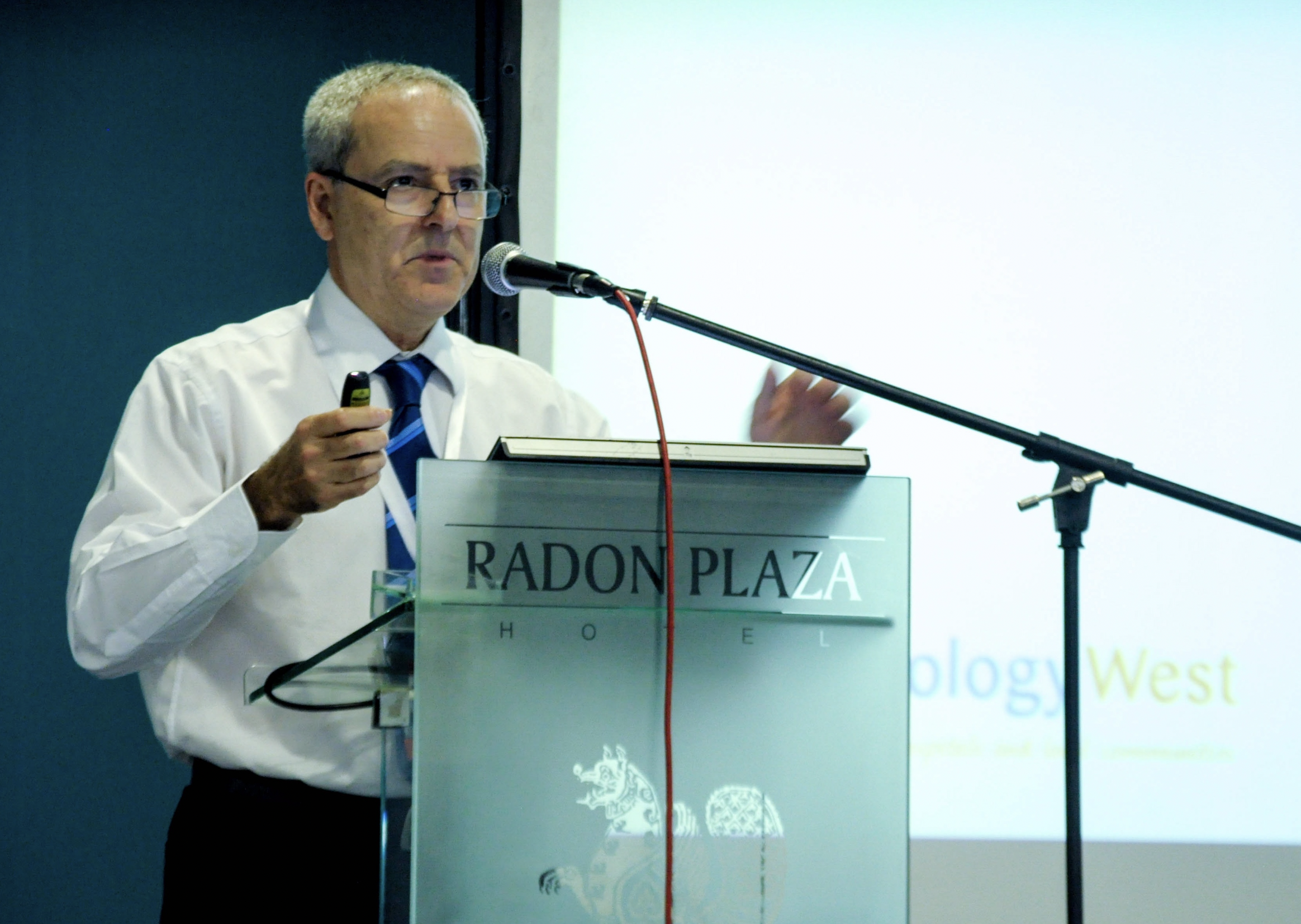
A man standing at a podium giving a speech.
Lead­ing Haema­tol­ogy researcher Prof Emmanuel Favaloro.

Pro­fes­sor Faval­oro has been ranked by Schol­arG­PS to be with­in the top 5 in the world for his work on VWD, and num­ber one in the world for the field of hemo­sta­sis.

“The theme of World Haemophil­ia Day this year is ‘Diag­no­sis: First Step to Care’. Here at NSW Health Pathol­o­gy our focus is on improv­ing dis­ease diag­no­sis of peo­ple in NSW, but also geo­graph­i­cal­ly more wide­ly due to dis­sem­i­na­tion of world best prac­tice from our world-renowned sci­en­tists and pathol­o­gists,” Pro­fes­sor Faval­oro said.

“This year being the 100 year anniver­sary of the ini­tial iden­ti­fi­ca­tion of VWD, we aim to pro­vide greater access to care for the large num­ber of peo­ple liv­ing with haemophil­ia, or VWD, or indeed any bleed­ing dis­or­der, who are yet to be iden­ti­fied or prop­er­ly diagnosed.

“Through my research, I hope to bring improved diag­no­sis and thus also treat­ment options to peo­ple liv­ing with bleed­ing dis­or­ders and help improve their qual­i­ty of life.

“Although bleed­ing dis­or­ders can lead to seri­ous com­pli­ca­tions, a diag­no­sis need not pre­vent peo­ple from liv­ing a nor­mal life.”

A logo for World Haemophilia Day 2026

Skip to content