




Media Contact
Related News
Related News


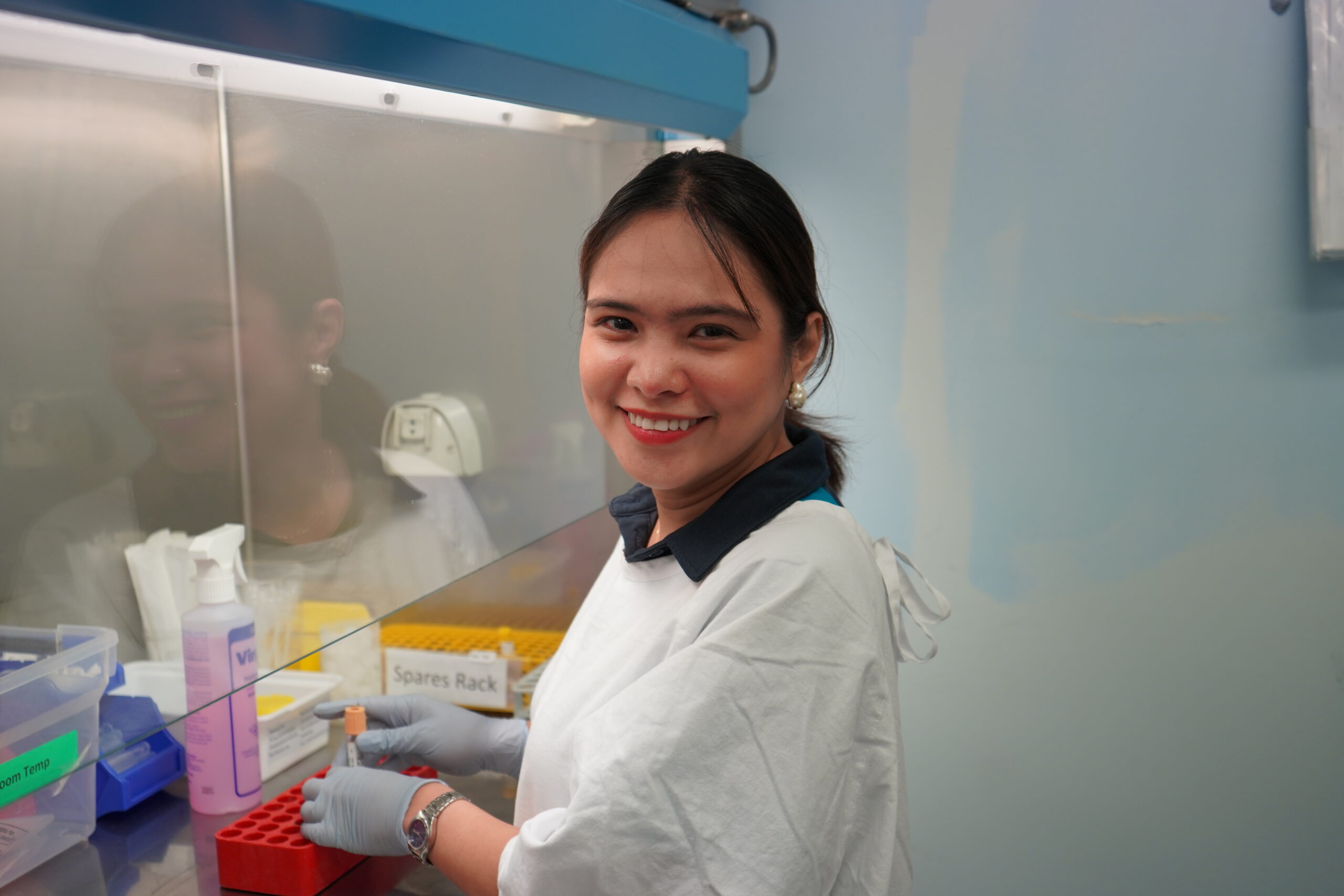


When baby Bohdi Higginson began suffering devastating seizures at just three months of age, clinicians knew they were facing a rare and complex condition. The answer ultimately came through genomic testing at NSW Health Pathology’s Genomics Laboratory at Prince of Wales Hospital at Randwick.
It’s precision medicine in practice, where a team led by genetic pathologist Dr Michael Buckley and clinical geneticist Professor Tony Roscioli helped identify the genetic cause of baby Bohdi’s epilepsy.
The diagnosis revealed a change in the KCNT1 gene, a rare genetic variant associated with catastrophic epilepsy. The result provided clinicians with the information needed to explore a targeted treatment approach that would lead to a world-first medical breakthrough.
Bohdi’s mother, Steph Higginson, first noticed something was wrong when Bohdi was just seven weeks old.
“I just knew that something was going on. This is not what an ordinary baby should be doing,” she said.
As his condition deteriorated, Bohdi began experiencing multiple seizures a day, many of which Steph captured on camera to help doctors understand what was happening.
When clinicians confirmed the diagnosis, the news was devastating.
“I remember my first question was, ‘How long is my son going to live?’ And they were unable to tell me that,” she said.
“It was a very big shock to me as his mum that my son was critically ill and he could die very soon.”
The genetic diagnosis provided clinicians the information they needed to look beyond conventional epilepsy treatments and consider a precision medicine approach targeted to the specific genetic change responsible for Bohdi’s condition.
The power of genomic testing
Professor Roscioli said genomic testing plays an increasingly important role in helping families find answers for rare diseases.
“About 10 per cent of children seen in hospital early in life are there because of a rare condition,” he said.
“There are more than 4,000 genes currently known to be associated with genetic disorders and, as knowledge increases, our ability to make diagnoses continues to improve.”
While KCNT1-related epilepsy is a recognised condition, it is just one of hundreds of genes analysed when a child is referred for genomic testing because of seizures or developmental concerns.
“KCNT1 is a known gene that can result in epilepsy, but it is one of hundreds of different genes that are considered when the referral is for genomic analysis for epilepsy,” Professor Roscioli said.

The Randwick Genomics Laboratory uses sophisticated analysis systems to search for rare DNA changes that could explain a patient’s condition. Even with these advances, a diagnosis is currently found in only about 40 per cent of children referred for genomic testing due to epilepsy or intellectual disability.
For Professor Roscioli, the case highlights the importance of close collaboration between genomic scientists and clinicians.
“This is critical,” he said.
“The specific details of every family need to be summarised for the laboratory so genomic testing can focus how the DNA sequence is analysed. Clinicians like being able to have this conversation. It demystifies the laboratory and improves clinical outcomes.”
A world-first treatment
When doctors presented Steph with the possibility of a novel treatment specifically designed to target the KCNT1 pathway, she faced an agonising decision.
“I was told that this was pretty much the only option they’ve got available for his condition. So to me, it was a no-brainer. How could I say no when it could be exactly what he needed?”
At the same time, she understood the risks.
“It was terrifying for Bohdi to be the first person with this condition to have a medication that is unknown to everyone.
“But it did give me hope that the treatment was not just masking the symptoms but treating the condition.”
Just days after treatment began, Bohdi’s seizures stopped.

Hope for the future
Professor Roscioli described his reaction on hearing the news.
“It was both amazement and happiness that the work we are doing to institute genomic diagnostics for rare conditions in NSW is benefiting people,” he said.
He believes maintaining genomic expertise within the public health system is essential to ensuring all families have access to life-changing diagnoses and treatments.
“It is critical to foster and maintain this expertise, particularly in the public health system, so that families from every background can access it,” Professor Roscioli said.
“There are often quite complex situations that require individualised systems to get to the right answer, and the right answer quickly. The application of precision medicine requires it.”

While cases like Bohdi’s remain uncommon, Professor Roscioli is optimistic about the future.
“Currently, just over one per cent of genomic diagnoses lead to some form of specific treatment change,” he said.
“The first step is understanding what causes a disease. The second is making a genomic diagnosis. The third, treatment, requires these. As long as genomic diagnostic services continue to meet this need, increasing knowledge will lead to more and more conditions having therapies.
“A generation ago, all of this was inconceivable. We can expect many rare conditions to have a treatment in the next generation.”
Steph credits the rapid genomic diagnosis with changing the course of her son’s life.
“I just want to say thank you to (the genomics team) for being so wonderful and so good at their job,” she said. “They’ve given me my boy back.”
Bohdi’s story shows how genomic medicine is moving beyond diagnosis alone, helping clinicians connect the right patient to the right treatment at the right time, and offering new hope to families affected by rare disease.